How to Prepare Furniture for Donation Pickup in 7 Steps
Last Updated: November 1, 2026
Quick Summary
To prepare furniture for donation pickup, first confirm the charity accepts the item, then clean it, empty every drawer and cushion, and disassemble it safely. Clear a path to the door, note any damage, and schedule the pickup once everything is staged. Learning how to prepare furniture for donation pickup prevents rejected items and missed pickups.
- Confirm each item is on the accepted list before cleaning or hauling anything.
- Empty every drawer, cabinet, and cushion, and check under cushions and inside frames.
- Bag and label hardware, and tape bags to the item where they won't get lost.
- Photograph each piece's condition before it leaves for your records.
- Check stairs, elevators, parking, and gate codes before scheduling the pickup.
Table of Contents
- Check Whether Your Furniture Meets Donation Guidelines
- How to Clean Furniture Before Donating It
- Clear Out Personal Belongings and Loose Items
- Disassemble and Secure Furniture for Safe Transport
- Furniture Donation Checklist for Pickup Day
- Scheduling Your Furniture Donation Pickup and Handling Access Issues
- Booking Your Pickup With JunkFree
- Frequently Asked Questions
Check Whether Your Furniture Meets Donation Guidelines
Before you clean or haul anything, learn how to prepare furniture for donation pickup by first checking whether your furniture is something a donation program will take. Most charities want gently used pieces that are safe to use, clean, and complete.
Start with a simple test. Ask yourself whether you would be comfortable putting the item in your own living room. If the answer is no, it probably won't be accepted.
Items that are usually accepted
- Sofas, loveseats, and armchairs without rips, stains, or broken frames
- Dining tables and chairs that are sturdy with no loose legs
- Dressers, nightstands, and bookcases with working drawers and doors
- Beds and bed frames, often with rules about mattresses and box springs
- Desks, coffee tables, and end tables in good shape
Items that are usually turned away
- Furniture with bed bugs, mold, or strong smoke or pet odors
- Pieces with broken frames, cracked wood, or missing parts
- Stained, torn, or heavily worn upholstery
- Cribs and car seats, which many programs cannot accept for safety reasons
- Mattresses, unless the donor accepts them specifically
How to Clean Furniture Before Donating It
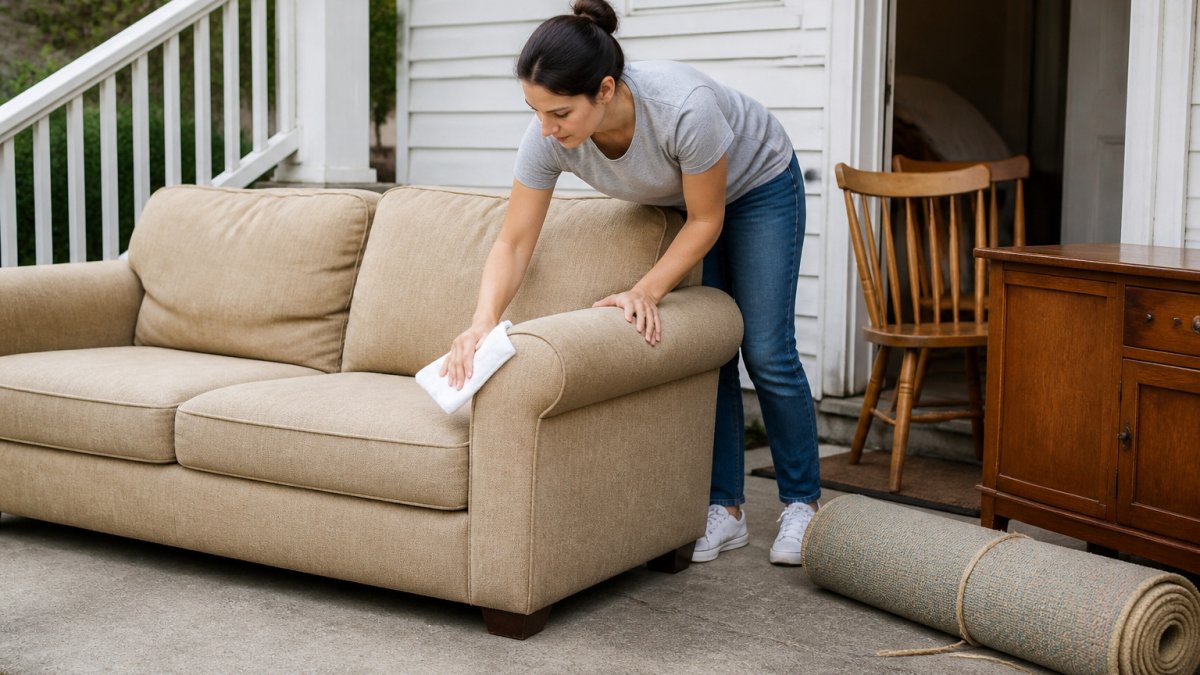
Clean every item as part of how to prepare furniture for donation pickup. A clean piece is more likely to be accepted, and it helps the people who receive it.
Work through each piece in this order:
- Vacuum upholstery, cushions, and crevices with a brush attachment
- Wipe hard surfaces with a damp cloth and mild soap, then dry them
- Brush off pet hair with a rubber glove or lint roller
- Spot-clean small stains, but test cleaners on a hidden area first
- Air out pieces that smell musty and let them dry completely
Cleaning also helps you spot problems. Look closely at seams, joints, and the underside for damage, pests, or loose parts. Note anything you find so you can tell the pickup team up front.
Clear Out Personal Belongings and Loose Items
Empty every drawer, cabinet, and cushion before the truck arrives. Crews are not able to sort through your things, and anything left behind can be lost or thrown away.
Check these common hiding spots:
- Drawers, including the back and the bottom
- Under cushions and inside sofa and chair frames
- Inside cabinets, shelves, and doors
- Behind removable panels or backing boards
Pull out papers, mail, and any documents that contain personal information. Shred or safely store anything sensitive. Remove keys, batteries, and small loose items too, since these fall out easily during loading.
Disassemble and Secure Furniture for Safe Transport
Disassembly protects the piece, the crew, and your doorways. Do it the day before pickup so hardware has time to be bagged and taped, and so you are not rushing while the truck idles.
What to take apart, and what to leave alone
- Remove legs, shelves, drawers, detachable headboards, and removable glass tops.
- Take off doors from cabinets and wardrobes, and tape the hinges to the frame.
- Leave structural frames, glued joints, and factory-assembled bases intact unless the charity asks otherwise. Over-disassembly can make a piece ineligible.
- Keep the original hardware bag if you have it; otherwise use a zip-top bag and tape it to the underside or back of the piece where it will not be lost.
- Label each bag with the item name and the room it came from.
Protect glass, mirrors, and edges
Wrap glass and mirrors in blankets or cardboard and mark them "FRAGILE" on both sides. Wrap corners and sharp edges with cardboard or foam. Stack heavy items low and keep loose parts in one labeled bin so nothing rolls under the truck.
Document condition before it leaves
Photograph each piece from the front, back, underside, and any damaged area. Include a photo of the hardware bag taped to the item. These photos serve two purposes: they help the charity confirm the item matches what was approved, and they give you a record if you claim a deduction. Keep the photos with your donation receipt.
Safe lifting and injury prevention
Most furniture injuries happen during the carry, not the disassembly. Follow these rules:
- Clear a wide path from the item to the door before you lift anything. Move rugs, toys, and cords out of the way.
- Lift with your legs, keep the load close to your body, and do not twist while carrying.
- Use team lifting for anything awkward or over roughly 50 pounds. Two people should lift together on a count.
- Wear closed-toe shoes and work gloves. Remove jewelry that can catch on upholstery.
- Never carry a piece down stairs alone, and never walk backward down stairs.
Stage items for a fast load
Move everything to a single staging area near the ground-level exit or curb the night before. Group hardware bags with their pieces, keep glass upright, and stack in the order the crew will load. A staged pickup takes minutes instead of an hour and reduces the chance of a missed window.
Furniture Donation Checklist for Pickup Day
Use this checklist the day before your pickup so nothing gets missed:
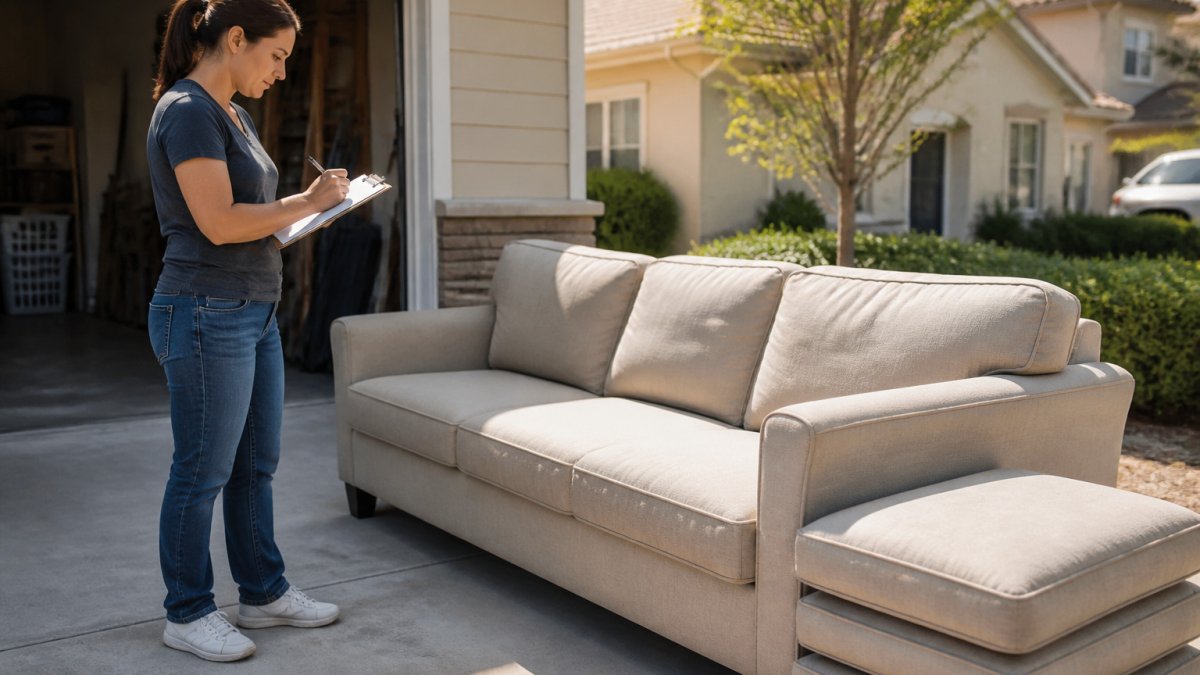
- Each item was checked against the accepted list
- Every piece was cleaned and aired out
- All drawers, cushions, and cabinets were emptied
- Papers and sensitive documents were removed
- Furniture was taken apart and hardware was bagged and labeled
Scheduling Your Furniture Donation Pickup and Handling Access Issues
Schedule the pickup only after every item is cleaned, emptied, and checked against the accepted-items list. If you are unsure what pickup will cost or whether access issues will change the price, get a free, no-obligation quote before you commit to a time.
When you call or book online, have this information ready:
- The full item list, including dimensions and approximate weight for heavy pieces
- The pickup address and the exact entrance the crew should use
- Whether the items are inside, in a garage, on a porch, or already at the curb
- The number of flights of stairs and whether there is a working elevator
- Any gate codes, building rules, or parking restrictions
Ask three questions before you confirm: Does the program charge a pickup fee or require a minimum donation value? Does the crew enter the home, or is pickup curbside/ground-level only? What is the cancellation and rescheduling policy?
Access logistics for apartments, condos, and difficult layouts
Most missed pickups are access problems, not donation problems. Work through these before pickup day:
- Stairs and hallways: Measure the narrowest doorway and stairwell turn. A sofa that fit through the door on move-in day may not fit out once legs or the frame are removed. Tell the scheduler the number of flights and whether there are landings.
- Elevators: Reserve a freight elevator if the building requires it, and confirm the weight limit. Pad the elevator cab with a blanket so upholstery does not snag on the door track.
- Parking: Ask whether the crew needs a loading zone, driveway access, or a parking permit. In many buildings, a truck cannot block a fire lane or a neighbor's assigned space, and a crew will not wait while you find parking.
- Building rules: Check whether your lease or HOA requires advance notice, a certificate of insurance, or a designated move-out window. Some buildings restrict moves to certain hours or weekdays.
- Gated communities: Provide a gate code or arrange a guest pass, and confirm the code is active on the pickup date.
If an item is rejected or the pickup is canceled
Rejections usually come down to condition, pests, or access. Ask the crew or scheduler which reason applied, and get it in writing if you plan to claim a deduction. Then choose a backup before the item sits on the curb:
- Rebook with a different charity that accepts the specific item
- Use a drop-off location if you can transport it yourself
- List it for free pickup through a local reuse group
- Schedule a removal service for items no charity will take
Keep a photo of each item's condition and a copy of any receipt or rejection note. Do not leave furniture on the curb hoping for pickup, many municipalities treat curbside items as illegal dumping and can fine the property owner.
The article lists the key access details a crew needs, and these are the points most likely to cause a missed pickup:
| Access issue | What to check | Why it matters |
|---|---|---|
| Stairs and hallways | Narrowest doorway and stairwell turn | Pieces that fit on move-in may not fit out |
| Elevators | Reserve freight elevator; confirm weight limit | Building may require it for large pieces |
| Parking | Loading zone or driveway access | Crews will not wait while you find parking |
| Gated communities | Active gate code or guest pass | Crew cannot enter without it |
| Walking distance | Distance from door to truck | Long walks can lead to refusal or a fee |
| Crew entry policy | Whether crew enters the home | Many will not go inside, so stage at the curb |
Booking Your Pickup With JunkFree
Once your furniture is ready and your access details are set, you can book with JunkFree. We serve North County San Diego and can help with furniture removal as part of a larger job.
Pick a day and time window, and tell us what you are hauling. book a junk removal appointment online, or request a free, no-obligation quote to get an up-front price before you commit. Before booking, check that we cover your area in North County San Diego service areas.
For a heavy piece like a dresser, read How to Remove a Heavy Dresser Safely first. It walks through safe lifting and when to ask for help.
Frequently Asked Questions
What condition does furniture need to be in to donate it?
Most donation programs accept gently used furniture that is clean, structurally sound and free of strong odors, pet damage or mold. Items with broken frames, torn upholstery that cannot be repaired, or missing essential parts are often rejected. Check each piece for stains, wobbly legs and loose hardware before scheduling. If an item is borderline, take photos and ask the donation organization whether it qualifies before the pickup date so you are not surprised on the day.
Should I clean furniture before donating it?
Yes. Wipe down hard surfaces, vacuum upholstery and cushions, and remove pet hair thoroughly. Clean furniture is more likely to be accepted and easier for the donation team to handle. Use a mild cleaner suited to the material, let surfaces dry completely, and avoid heavy fragrances that can cause problems for the next owner. Clean the items inside and out, including drawers and the underside of cushions.
Do I need to disassemble furniture before pickup?
Disassembling larger pieces, such as bed frames, tables and shelving units, can make them easier to carry through doorways and stairwells. Keep all screws, bolts and small parts together in a labeled bag taped to the main piece or stored in a clearly marked box. Do not take apart items that are not designed to be disassembled, and never remove parts that the next owner would need to use the furniture safely.
What should I do if a donation center cannot accept my furniture?
If a donation center declines an item, ask for the reason and whether another organization nearby might accept it. Many rejected items can be sold, recycled or taken to a bulk waste facility. If pickup is canceled or an item is turned away on the day, keep it clear of walkways and ask your junk removal provider about options for disposal or recycling so the rest of the cleanout stays on schedule.

Got junk? We'll clear it.
Family owned in Fallbrook, serving all of North County San Diego. Book online or get a free, no-pressure quote.